Why Is My Refrigerator Making Loud Noise? 10 Steps to Fix It
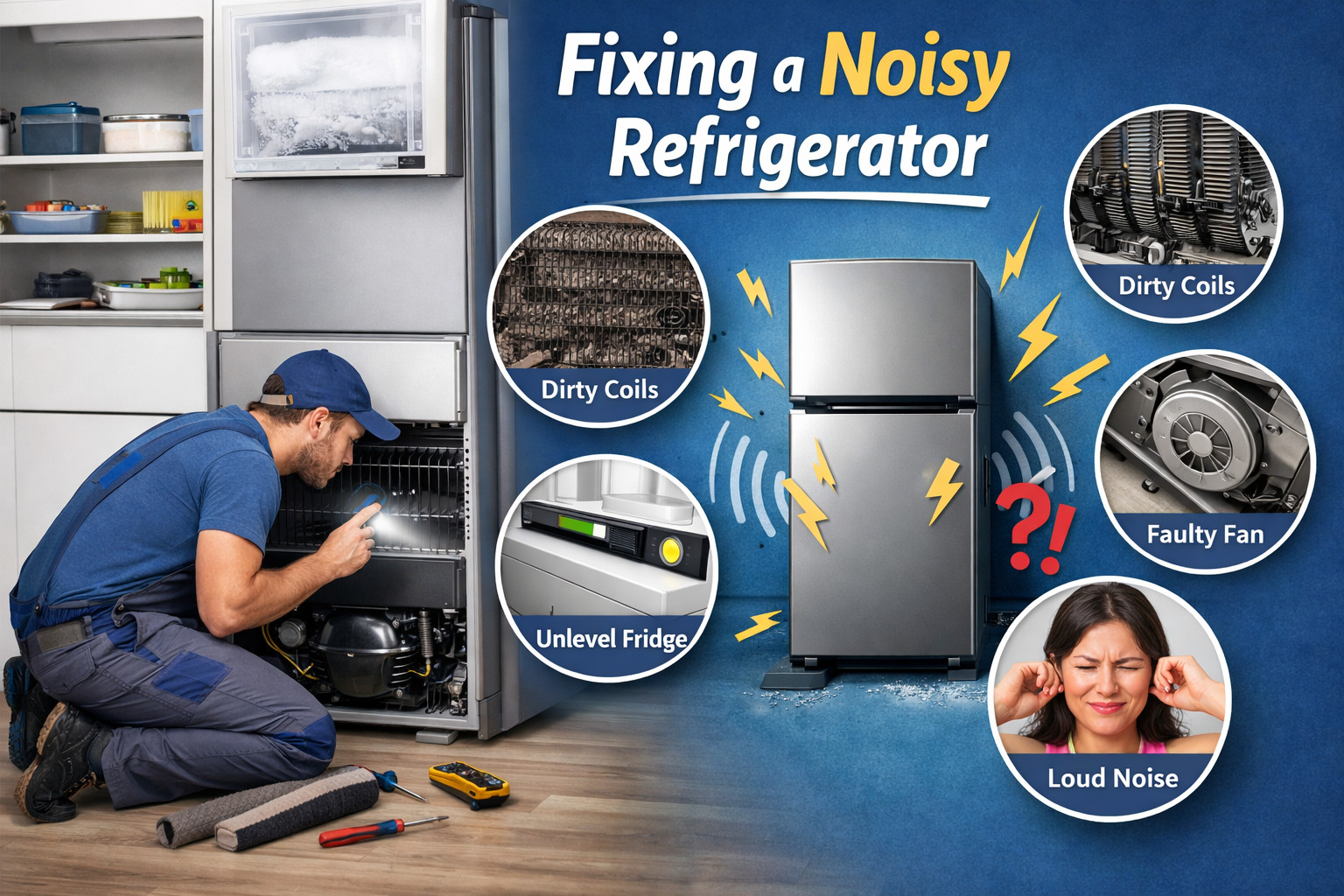
A refrigerator is one of the most important appliances in your home, quietly running day and night to keep your food fresh. Because it operates continuously, it’s normal to hear occasional sounds like light humming or soft clicking. However, if your refrigerator suddenly starts making loud or unusual noises, it can quickly become concerning.
Loud buzzing, rattling, grinding, or knocking sounds often indicate that something inside the refrigerator needs attention. Fortunately, many of these issues are minor and can be fixed without professional help. In this guide, we will walk through the most common reasons a refrigerator may be making loud noises and explain the steps you can take to fix the problem.
Why Is My Refrigerator Making Loud Noise?
Before attempting any repairs, it helps to understand what may be causing the noise. Refrigerators contain several moving parts such as fans, compressors, and motors. Over time, these components can collect dust, loosen, or wear out, which may lead to louder operation.
Some of the most common causes of refrigerator noise include:
- Dirty or blocked condenser fan
- Ice buildup around the evaporator fan
- Loose components or panels
- An unlevel refrigerator
- A malfunctioning compressor
- Worn fan motors
- Objects vibrating on top of or behind the refrigerator
Identifying the type and location of the sound is the first step toward solving the issue.
Step 1: Identify the Type of Noise
Different sounds can indicate different problems. Listening carefully to the noise your refrigerator makes can help narrow down the possible cause.
Common refrigerator noises include:
- Buzzing or humming: Often related to the compressor or condenser fan.
- Rattling: Usually caused by loose parts or objects vibrating.
- Clicking: May happen when the compressor attempts to start.
- Grinding or squealing: Often indicates a failing fan motor.
- Knocking: Could be caused by pipes or refrigerant movement.
Try to determine whether the sound is coming from inside the freezer, behind the refrigerator, or underneath the appliance. This will help you identify the component that needs attention.
Step 2: Check if the Refrigerator Is Level
An unlevel refrigerator can easily create rattling or vibrating sounds. If the appliance does not sit evenly on the floor, vibrations from the compressor can cause the entire unit to shake.
To check if the refrigerator is level, gently push on the corners of the appliance. If it rocks back and forth, it likely needs adjustment.
How to fix it:
- Pull the refrigerator slightly away from the wall.
- Locate the adjustable leveling legs at the front bottom of the appliance.
- Turn the legs clockwise or counterclockwise to adjust the height.
- Continue adjusting until the refrigerator sits firmly on the floor.
Once the refrigerator is level, vibrations and rattling noises often disappear.
Step 3: Remove Objects That May Be Vibrating
Sometimes the refrigerator itself is not the source of the noise. Objects placed on top of the appliance or near it may vibrate when the compressor runs.
Check for the following:
- Bottles, containers, or decorations on top of the refrigerator
- Loose magnets or items attached to the sides
- Cabinets or walls touching the appliance
- Items stored too tightly inside the refrigerator
Removing or repositioning these objects can immediately eliminate rattling or buzzing sounds.
Step 4: Inspect the Condenser Fan
The condenser fan helps cool the compressor and release heat from the refrigerator. It is typically located behind the refrigerator or underneath it.
If the fan becomes clogged with dust or blocked by debris, it may produce loud buzzing or rattling noises.
How to inspect the condenser fan:
- Unplug the refrigerator for safety.
- Locate the rear or bottom access panel.
- Remove the panel using a screwdriver.
- Find the condenser fan and inspect the blades.
Look for dust buildup, debris, or anything that might be blocking the fan.
How to fix it:
- Clean the fan blades using a brush or vacuum.
- Remove any objects blocking the fan.
- If the fan blades are damaged, the fan motor may need replacement.
Cleaning the condenser fan often restores quieter operation.
Step 5: Clean the Condenser Coils
Condenser coils release heat from the refrigerator. When these coils become covered with dust or pet hair, the appliance has to work harder to maintain the correct temperature. This extra strain can make the refrigerator louder than usual.
Condenser coils are usually located behind the refrigerator or underneath it.
Cleaning the coils:
- Unplug the refrigerator.
- Locate the condenser coils.
- Use a coil cleaning brush or vacuum cleaner to remove dust.
- Clean carefully around the surrounding components.
Cleaning the coils improves efficiency and often reduces compressor noise.
Step 6: Check the Evaporator Fan
If the loud noise is coming from inside the freezer, the evaporator fan may be the problem. This fan circulates cold air throughout the refrigerator and freezer compartments.
When ice forms around the fan or the motor begins to fail, you may hear grinding, squealing, or rattling sounds.
How to check the evaporator fan:
- Open the freezer compartment.
- Remove the interior rear panel.
- Locate the evaporator fan.
- Inspect for ice buildup or loose fan blades.
How to fix it:
- Defrost any ice buildup around the fan.
- Tighten loose fan blades.
- Replace the fan motor if it produces grinding noises.
A faulty evaporator fan is a common cause of loud refrigerator operation.
Step 7: Inspect the Compressor Area
The compressor is located at the back bottom of the refrigerator. It is responsible for circulating refrigerant throughout the cooling system.
A compressor normally produces a quiet humming sound. However, if it becomes loose or worn, it may generate loud buzzing or knocking noises.
Check the following:
- Loose compressor mounting bolts
- Vibrating refrigerant lines
- Damaged rubber mounting grommets
Tightening loose components or repositioning vibrating pipes may reduce the noise. If the compressor itself is failing, professional repair is usually required.
Step 8: Check the Ice Maker
If your refrigerator has an ice maker, some sounds are completely normal. The unit may click, buzz, or knock when it fills with water or releases ice cubes.
However, if the ice maker produces constant buzzing, it may be trying to draw water while the water supply is turned off.
Solution:
- Make sure the refrigerator water supply valve is turned on.
- Turn off the ice maker if it is not connected to water.
This simple adjustment can eliminate unnecessary noise.
Step 9: Check the Drain Pan
Most refrigerators have a drain pan underneath the appliance that collects water during the defrost cycle. If this pan becomes loose or misaligned, it may vibrate while the refrigerator runs.
How to fix it:
- Locate the drain pan underneath the refrigerator.
- Ensure the pan sits securely in its holder.
- Reposition it if necessary.
Securing the drain pan often stops rattling noises.
Step 10: Ensure Proper Airflow Around the Refrigerator
Refrigerators need space around them for proper ventilation. When a refrigerator is pushed too close to the wall or cabinets, airflow becomes restricted. This can cause the compressor and fans to work harder and produce more noise.
Make sure there is enough clearance:
- At least 1–2 inches behind the refrigerator
- Some space on both sides
- Proper airflow near the compressor area
Providing enough ventilation helps keep the refrigerator running efficiently and quietly.
When to Call a Professional
While many refrigerator noises can be resolved with basic troubleshooting, some problems require professional service.
You should consider calling an appliance repair technician if:
- The compressor is extremely loud
- The refrigerator stops cooling properly
- The noise continues after cleaning and adjustments
- You hear grinding sounds from inside the sealed system
A professional technician can diagnose deeper mechanical problems and safely replace faulty components. If the noise continues after troubleshooting, contact us for expert assistance id you are in the Sarasota, Florida, area – our experienced technicians are ready to inspect your refrigerator and restore it to quiet, reliable operation.
Preventing Future Refrigerator Noise
Regular maintenance can help keep your refrigerator running quietly and efficiently for many years.
Helpful maintenance tips include:
- Cleaning condenser coils every 6 to 12 months
- Keeping the refrigerator level
- Avoiding overloading shelves
- Ensuring proper airflow around the appliance
- Checking fans periodically for dust or debris
Simple maintenance steps can prevent many of the issues that cause loud refrigerator noises.
Final Thoughts
A refrigerator making loud noise does not always mean there is a serious problem. In many cases, the issue is something simple like a loose part, dust buildup, or improper leveling.
By identifying the type of sound and following the troubleshooting steps in this guide, you can often fix the problem quickly and restore quiet operation. Regular cleaning and maintenance will also help extend the life of your refrigerator and prevent future problems.
If the noise continues after trying these solutions, contacting a qualified appliance repair technician is the safest and most effective option.
 Write review